
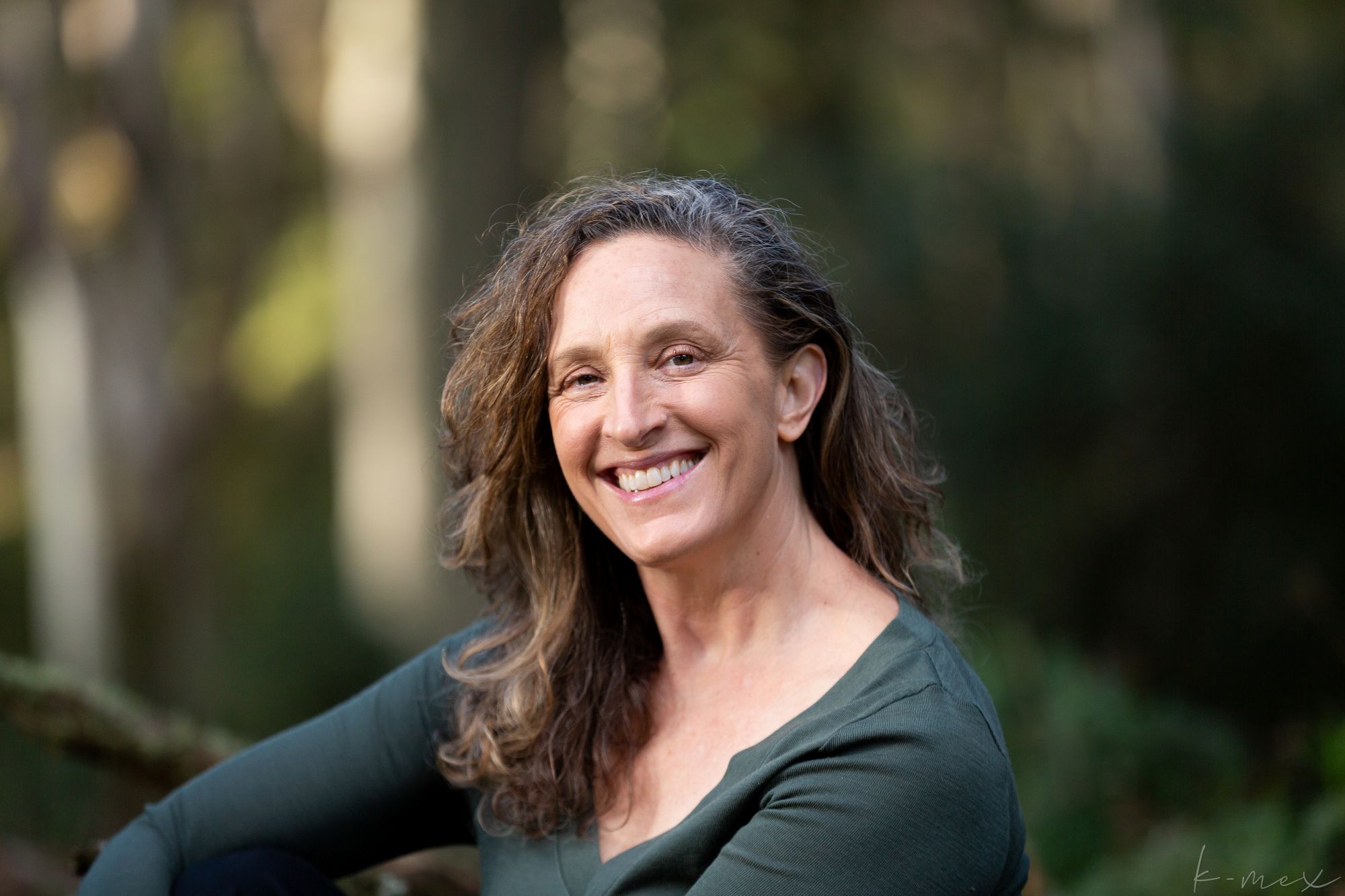
Ilka Tampke’s latest novel is sending out roots. It’s breaking ground and finding new readers for the Woodend-based author, both locally and out in the wild.
“This book has made a bigger splash,” Ilka says of the exquisitely-titled How to Love the World, published by Simon & Schuster.
“It’s penetrated a wider audience than my other books (Skin and Songwoman). They were both historical fictions set in a very ancient world on the other side of the planet, in the British iron age.
“This book is contemporary and set here, that’s the big difference, but all are about belonging to place – all are getting to the same questions, which are, how do you connect to a place, and how do you know you belong there?”
The new novel’s self-seeding destiny was perhaps interwoven into the narrative all along. How to Love the World was “written in tandem with this other creative force,” Ilka says. She’s referring to Mount Macedon.
The mountain is both setting and inspiration for the story, which opens with main character Nellika being pinned to a sparsely-used forest trail by a fallen manna gum branch.
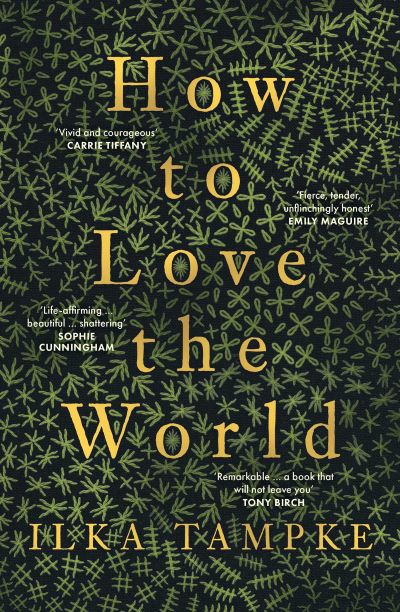
The blurb reads:
“Shockingly injured and unable to move, her only hope is that someone will find her.
As darkness falls on what might be her last day, Nellika must reckon with herself and the place where she lies. Is this fallen branch an accident or a punishment? As death draws close, the forest asks her: why should you live? And in the dark heart of her memories, she discovers that there is an answer.”
Just like Nellika, Ilka was walking these mountain paths each day as she wrote the book, drawing on the forest’s power to influence her own course and creativity.
The writer – and creative writing lecturer at La Trobe University – has lived in Woodend for 13 years, in which time she has come to love the dark, dense nature of the landscape.
“It’s a very unique forest,” she says. “It evokes the aesthetics of European forest mythology, narrative or fairy tales. But its ancestry, mythology and ecology are not European.”
Writing and researching the novel deepened Ilka’s immersion in this place.
“I did a lot of research about the forest to write this book,” she says. The discoveries led her to embark on the tandem writing of a PhD on the relationship between forests and creativity.
“It started out as an intuitive feeling that forests are important for people, and the more I researched that for the book, the more I realised science backs it up.”
Reasons to love the forest
Ilka says it’s proven that forests can help and heal us.
“Forests have a very pronounced and powerful effect on our physicality – they reduce all the bio-markers of stress; blood pressure, inflammation, cortisol. And they enhance our disease-fighting cells, our immunology,” she says.
“Spending time in forests reduces anxiety and depression and helps with post-traumatic stress disorder. It improves cognition – thinking and performing cognitive tasks.
“I became really interested in the intelligence and agency of forests. The vibrancy they have. We tend to think of nature as being a beautiful backdrop, but when you’re in a forest, it’s never like that, it acts on us.”
(In the case of Nellika, the forest commits an “act of violence”.)
Ilka says she noticed that she thought better in the forest, had ideas in the forest, and her imagination was sparked in more dynamic ways.
“So I thought, I’m going to test this out. I decided to spend one year, going every single day, and journalling, essentially about what did I learn in the forest today? I documented what happened when I exposed my thinking to the forest.”
This practice impacted the book’s non-linear structure. Nellika’s story is revealed not only from the worm’s-eye view of her entrapment, but through vignettes of backstory, reaching for light.
“That was not so much intentional but more of a consequence of writing this way,” Ilka says. “The novel had an ecology that wasn’t chronological. It was rhizomic, entangled, everything layered and teeming. But it’s also still. It doesn’t move – it’s rooted in place.”
Ilka says her readers are connecting with the close writing about nature.
“I think people find it refreshing or heartening to put language around how we are connected to nature in a world that’s too disconnected from it,” she adds.
The other defining theme of How to Love the World is motherhood and its impact on all members of a family.
“We’re better at talking about how motherhood is hard – the sleeplessness, the challenges around childcare,” Ilka says, adding she aimed to go deeper, via Nellika’s own woundedness.
“I really hoped in writing this book to prompt people to think about not only the natural world, but how interwoven it is in our ecology and family life.”
–
Ilka will talk about her story at two Goldfields Libraries events this season.
Thursday, 17 September, 5.30 – 6.30pm at Woodend Library, in conversation with Michelle Scott-Tucker.
Thursday, 19 November, 5.30 – 6.30, at Castlemaine Library, in conversation with Melissa Fulton.
– LAUREN MITCHELL