
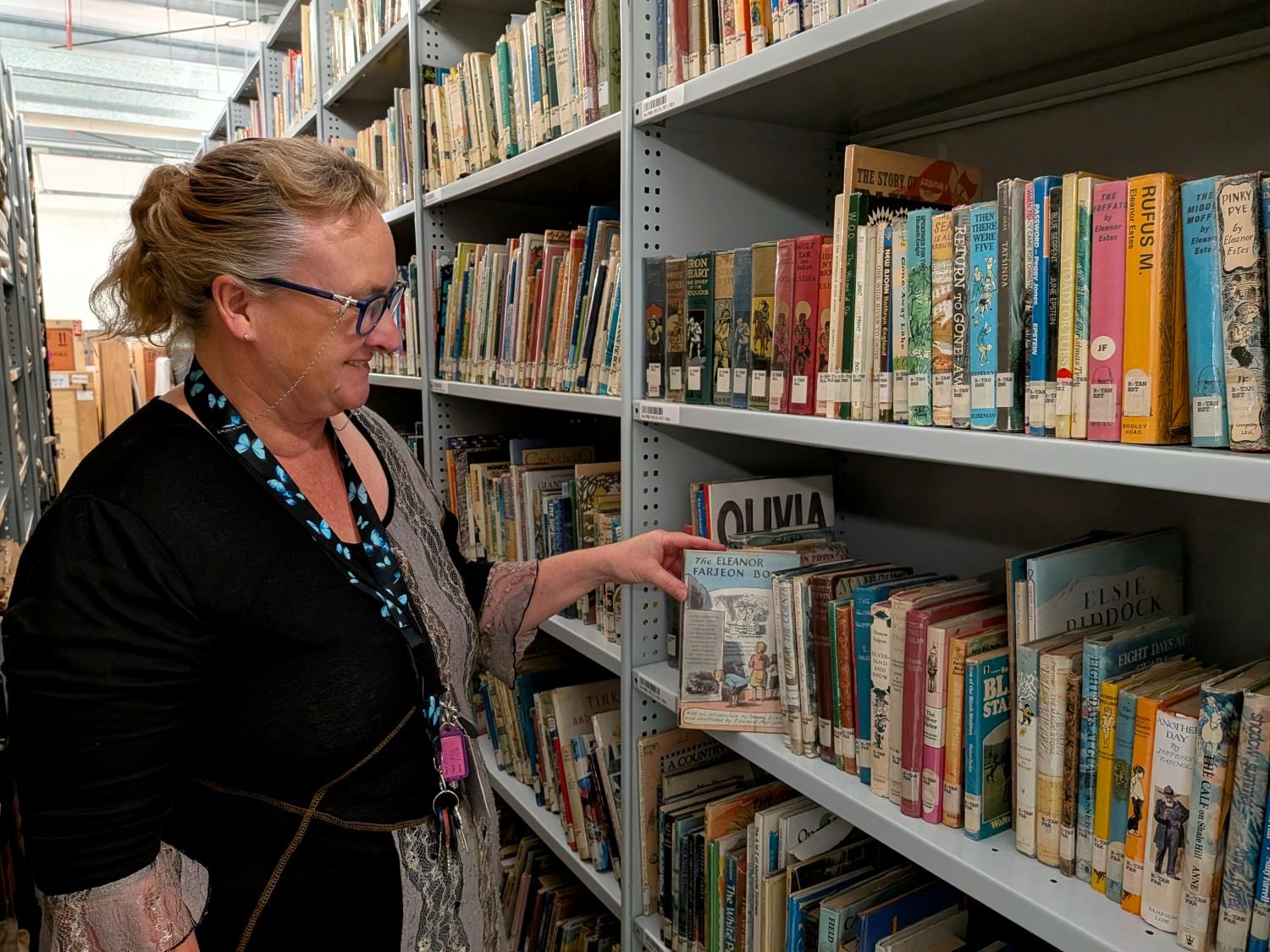
Mary Melis turns the Eze Glide compactus wheel and rolls back a portal to childhood. You may think the past lies in dreams. In photographs or games of old. But no. For any life-long book lover, it’s among the Bendigo Regional Archive Centre shelves in Nolan Street.
“There are pieces of gold in here,” Mary says. “Things that remind us of our childhood…”
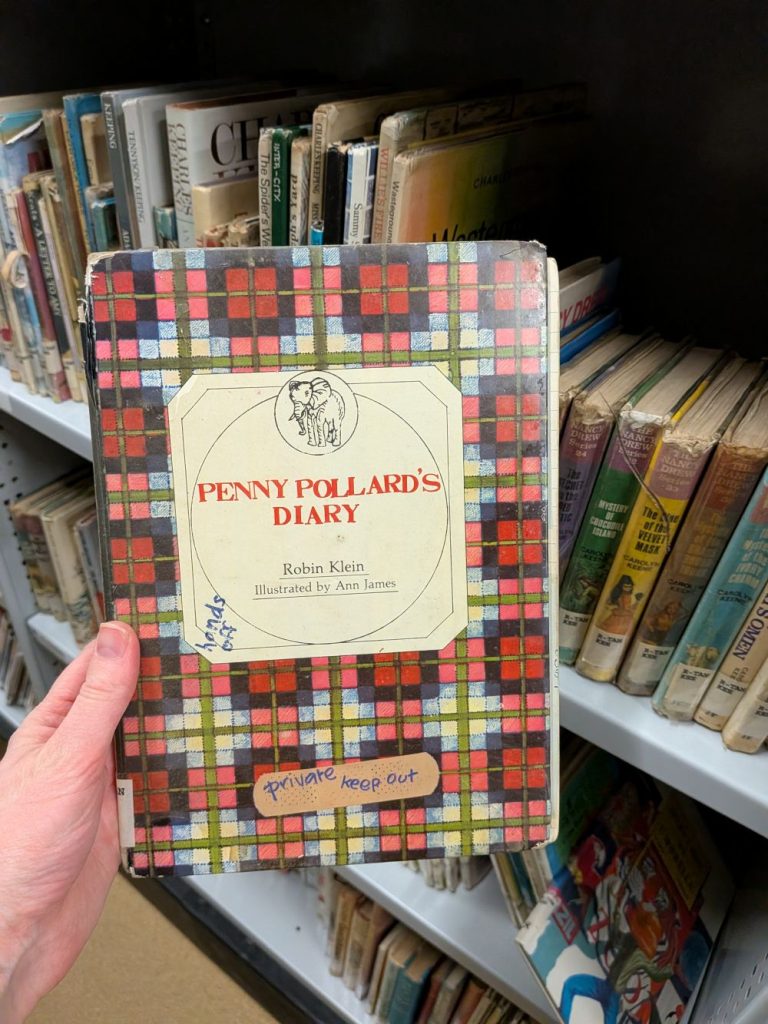
Cue the works of Maurice Sendack, Margaret Wild, Robin Klein and so many more.
This is the Tanner Collection, one of Australia’s most significant and comprehensive holds of historic and contemporary children’s literature, with many titles now making their way back into the Bendigo Library.
Eighty years of kid lit love
We’re highlighting the collection in 2026, in honour of this year’s 80th Children’s Book Council of Australia Awards, and the 80th anniversary of Euphemia Tanner beginning her fulltime career as a local librarian.
In 1935, the Australian Council for Education Research published a damning report into the lack of public libraries, and particular neglect of children’s offerings, stating, “there is not an acceptable children’s lending library in all of Australia.” And closer to home, noting “Bendigo has almost no library facilities.”
Community interest and demand saw the municipal Bendigo Citizens’ Free Children’s Library open in 1941, with 1400 books. (It expanded into the adult lending library in 1950.)
The infamous Miss Tanner became Bendigo’s – and Australia’s – first fulltime children’s librarian in 1946. Membership grew rapidly under her influence; in the first two years from 815 readers to 2111, before dropping by 500 a year later during the 1949 polio outbreak, when all in-coming books were fumigated as a precaution against spreading the disease.
Miss Tanner fuelled the reading habits of generations of local children, until her retirement in 1979. One of those who benefitted from her passion was former Bendigo Library manager Vivien Newton.
Rule breakers bond over books
“Miss Tanner was loved and feared in equal measure,” Viv says.
“I first met her when my family returned to Bendigo in 1968. We had to pay a $10 membership to join the Bendigo Library then. Each child could borrow two books on their card, and I had three younger siblings, so I used their cards as well to borrow eight books a week. I loved reading Mavis Thorpe Clark, especially The Min-Min, and the English writers like Rosemary Sutcliff and Kate Seredy.
“To use the Adult Library upstairs you needed to be 16, but by 14 I had read out the Junior Library, so Miss Tanner organised an adult card for me and my reading life became a diet of Georgette Heyer, Alistair McLean and 17 Magazine. I still love variety in the genres I reach for.”
An advocate for early literacy
Children’s literature specialist Jeffrey Prentice published the memoir Miss Tanner Pied Piper of Bendigo in 1995. The booklet’s title was a nod to Miss Tanner enlisting children to ‘work’ in the library. She had them stamping due dates and shelving books for 7 pence and a milkshake, or later 10c and an icy pole per shift.
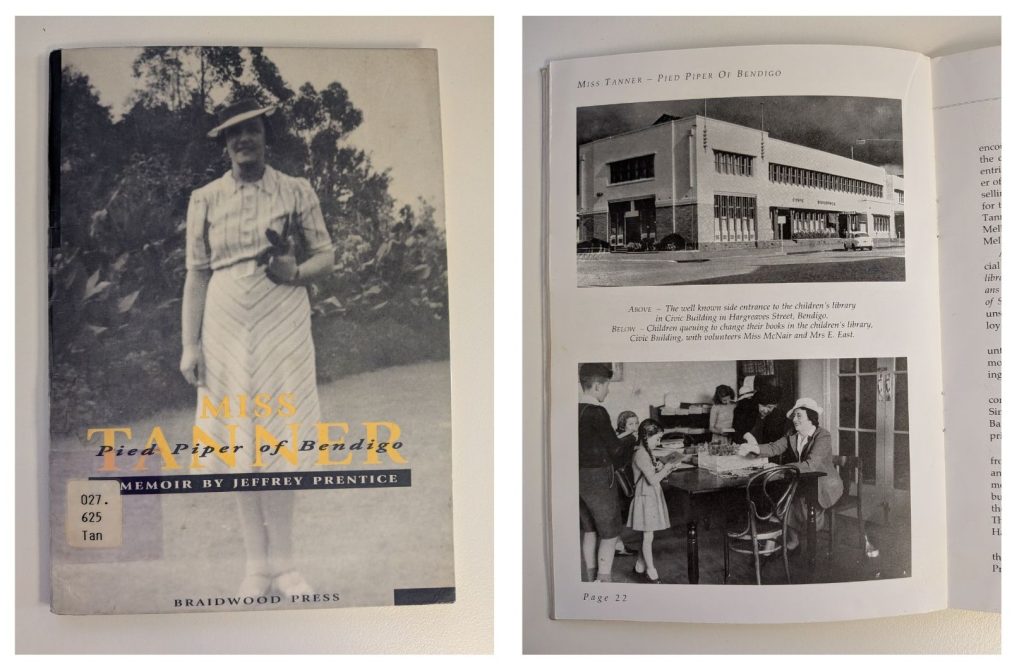
Jeffrey discovered Miss Tanner’s ground-breaking career after her death in 1993, when he purchased her personal reference collection on children’s literature and library practice.
“Her dedication to selecting and buying quality children’s books for thousands of young children to read was exemplary and her peers revered that fact,” wrote Jeffrey.
“She went out of her way to speak to kindergarten groups after hours and bought books for libraries in the district, especially the Kyneton and Castlemaine collections.”
In response to declining reading levels in the early 1970s, and as part of her presidency of the Business and Professional Women’s Club, Miss Tanner organised a Bendigo Teachers’ College seminar, then a public seminar titled Is Reading Necessary? Why Can’t Johhny Read?
She reviewed children’s books for the Bendigo Advertiser, her storytelling sessions were legendary, and she loved organising the activities and competitions of Book Week.
Despite a big life of books, Jeffrey wrote Miss Tanner died in “lonely circumstances” in the Mount Alvernia Hospital. Today, the Tanner Collection keeps her influence and achievements alive.
International award-winners unite
Viv was Regional Children’s Librarian when she and then-CEO Darren Lewis began collating the libraries’ awarded children’s books for a 50th CBCA Book Week anniversary display, in 1996. They discovered the local branches held all but six of the national winners.
“We also discovered the winners of the key international children’s literature awards on shelves throughout the region,” Viv says. Including the UK’s Kate Greenaway Award and the Carnegie Medal, the US’ Newbery Medal and Caldecott Medal and the Hans Christian Anderson Medal. And so, the Tanner Collection was christened.
“Miss Tanner had been responsible for buying these for the children of Bendigo,” Viv says.
“We then began purchasing short listed and winning books each year, specifically for the Tanner Collection, allowing new copies to be on hand for school visits.
“It’s a solid snapshot of what was available to Australian children, largely from 1950 to 2010s, and it’s the only research collection outside the State Library of Victoria.”
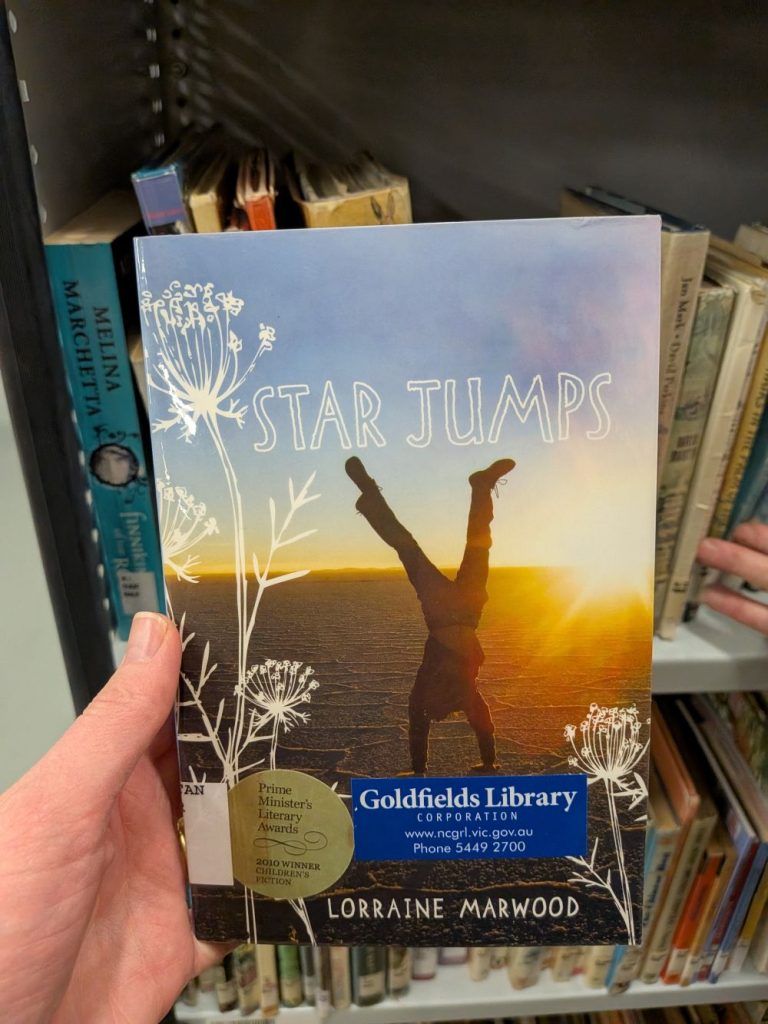
The collection has supported children’s literature studies at La Trobe University, as it did the late local children’s author Lorraine Marwood’s first May Gibbs Mentorship; the only one to be offered in a regional library.
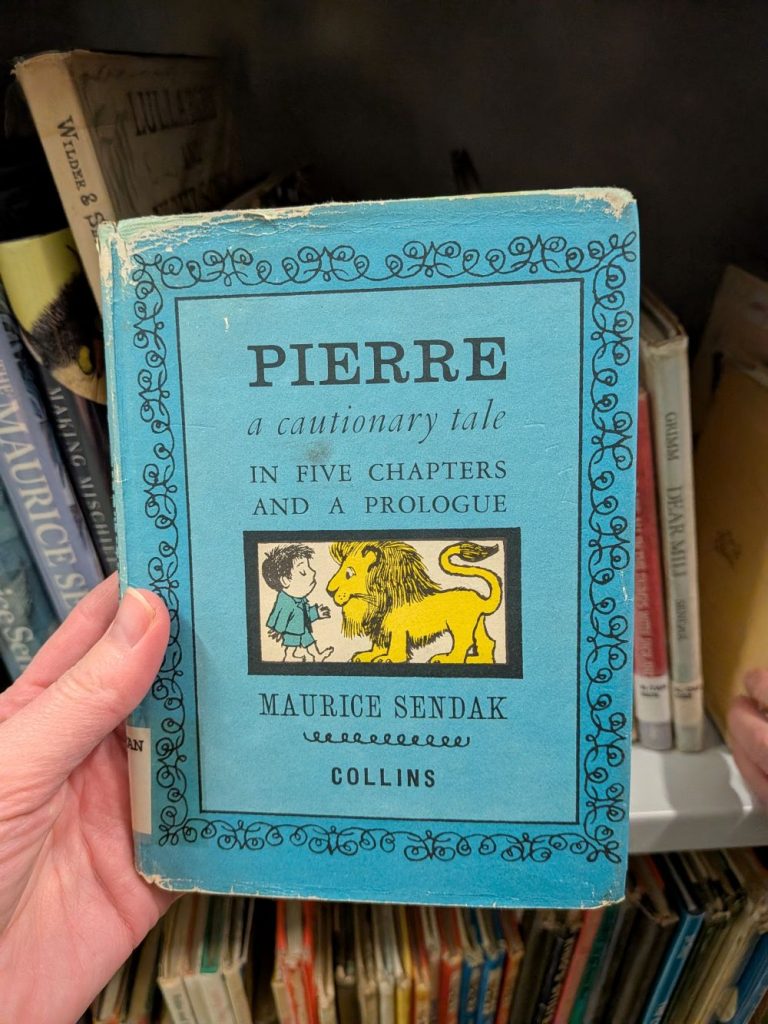
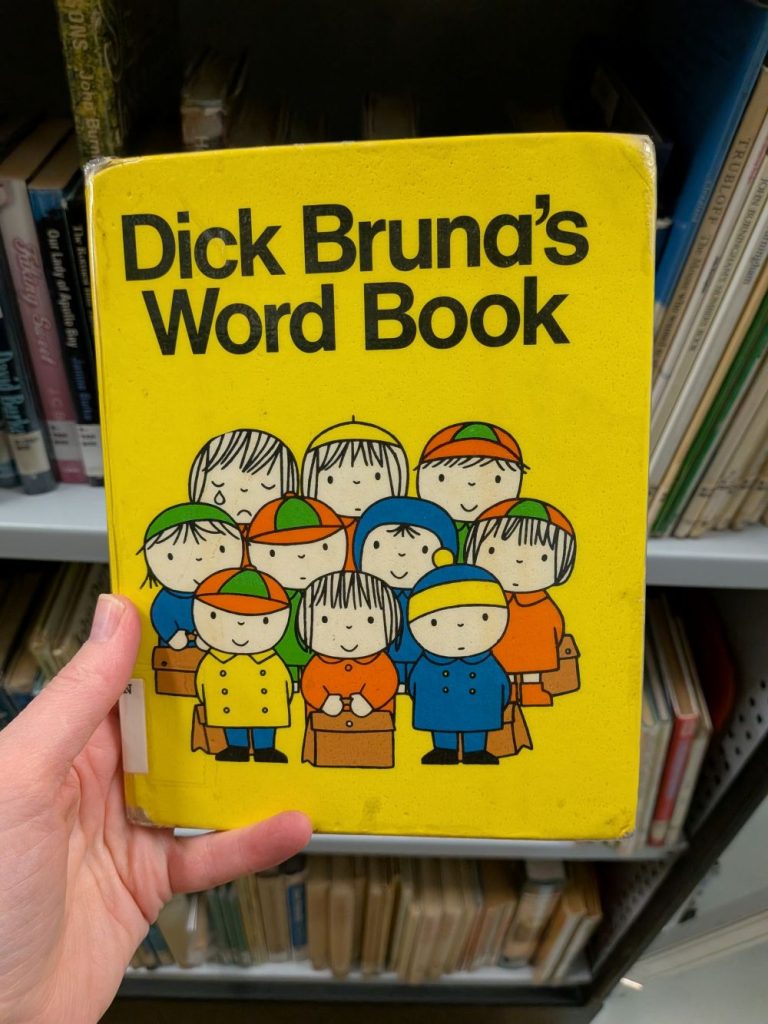
Dusting off the jackets
Today the Tanner Collection contains 9,966 items. Mary is a dedicated caretaker. She’s replacing covers, reparing spines, sometimes finding unicorns…
“I’ve got a list of books I know are missing from the collection, and some things are absolutely impossible to find, but I’ve been searching op shops,” she says.
“I love it. Working with the collection in general is my favourite thing. I need to see the books and see the people and see that I’m making a difference.”
Mary also loves hearing the comments from the in-branch Tanner shelves of, “oh wow, I remember this…” Her own favourite childhood titles are here, namely the Nancy Drew and Trixie Belden books, The Secret Garden and Charlotte’s Web.
She’s visiting the archive centre regularly, in her quest to bring all award-winning titles, plus 100 Australian and 50 international significant children’s authors’ works, back into the library. Today, CS Lewis’ Narnia books have made the cut.
“My Dear Lucy,” starts the author’s opening dedication to his young niece.
“I wrote this story for you, but when I began it, I had not realised that girls grow quicker than books. As a result, you are already too old for fairy tales, and by the time it is printed and bound you will be older still. But some day you will be old enough to start reading fairy tales again. You can then take it down from some upper shelf, dust it, and tell me what you think of it…”
If you’re likewise old enough to be reading children’s books, maybe for the first time, maybe after 80 years, maybe you’ll find your favourites here. A growing portion of the Tanner Collection can be browsed and read upstairs in the Bendigo Library, while titles in the archive are available to view in the branch, by request.
Highlights of the Tanner Collection
- Children’s Book Council of Australia Awards (CBCA) winners 1946-present
- Carnegie Medal for Writing winners 1936-present
- Carnegie Medal for Illustration (until 2022 the Kate Greenaway Medal) winners 1956-present
- Caldecott Medal winners 1938-present (USA)
- Newbery medal winners 1922-present (USA)
- Hans Christian Andersen Awards winners. The writing award was first given in 1956, the illustration award in 1966. (International)
- The oldest item is an 1852 edition of John Passmore Edward’s Uncle Tom’s Companions, or, Facts Stranger Than Fiction: a supplement to Uncle Tom’s Cabin, which includes short biographies of people who had experienced slavery.
- It contains many variations of Alice in Wonderland, including Alitji in Dreamland, an Aboriginal version adapted and translated by Nancy Sheppard.
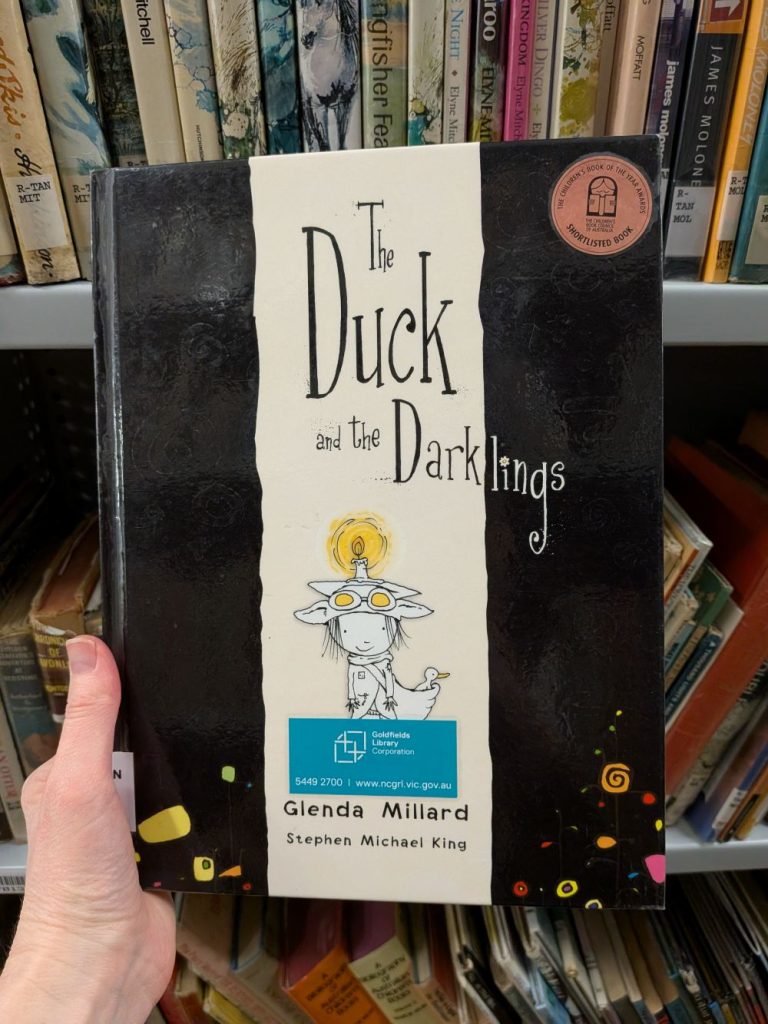
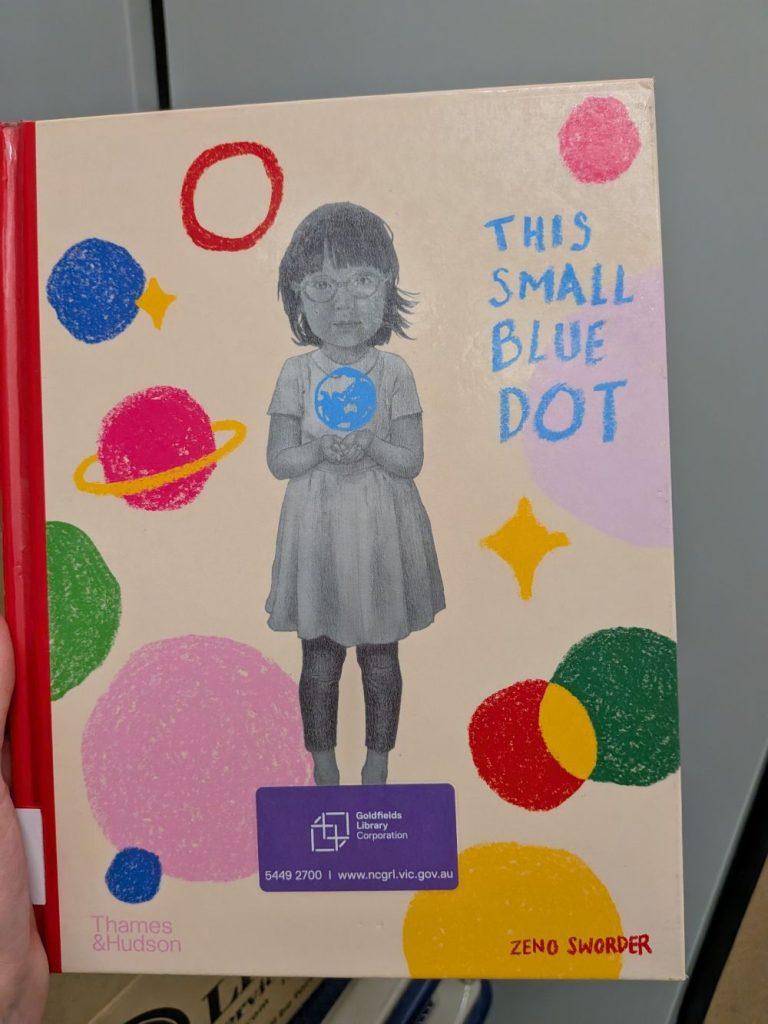
- Local award-winners Lorraine Marwood and Glenda Millard are represented, and former local Zeno Sworder.
We acknowledge Jeffrey Prentice’s research and book ‘Miss Tanner Pied Piper of Bendigo’, which informed this story.
– By LAUREN MITCHELL