
A pilgrimage of words and wilder spaces

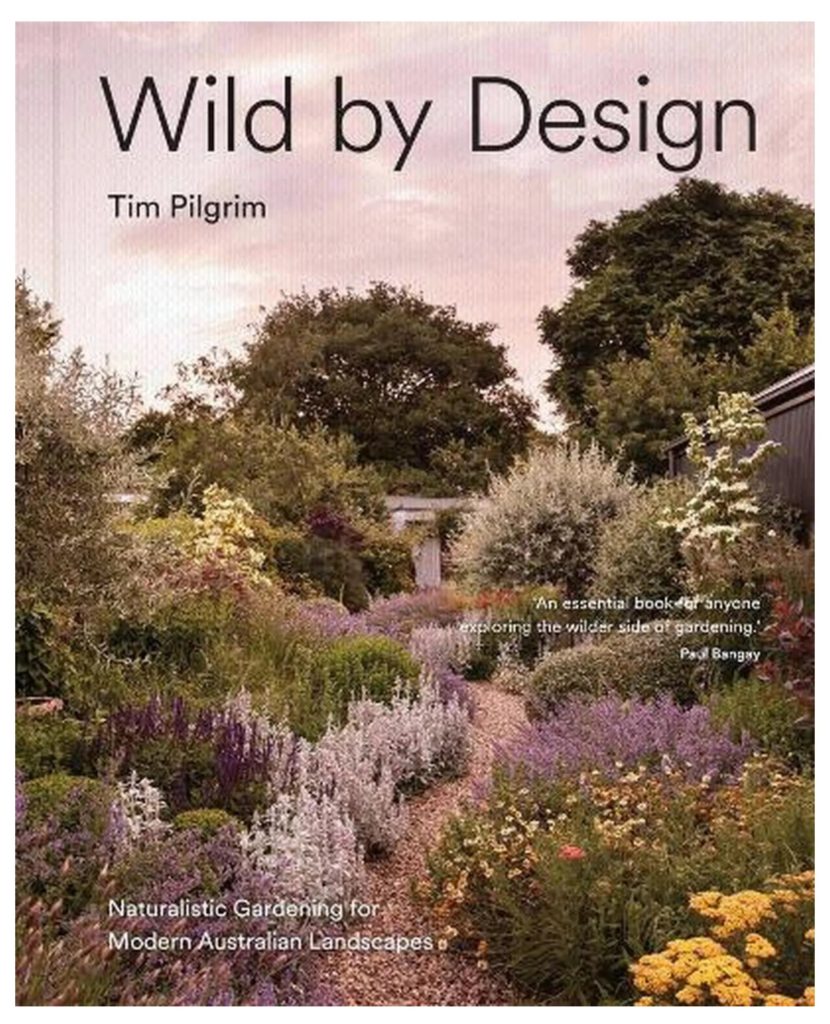
Tim Pilgrim almost didn’t write Wild by Design. The Newstead-based horticulturalist and 2026 Indie book of the Year winner was hesitant when Murdoch Books approached him with the idea a few years ago.
“I didn’t say yes straight away,” Tim says, speaking to Goldfields Libraries from his Castlemaine design studio.
“I thought there were a lot more people better placed to write about such a large topic as naturalistic gardens than me.”
Eventually, Tim’s curiosity got the better of him, but he had a proviso. “That it wasn’t just my voice,” he says. “I wanted to ask a lot of questions of those people I held in high regard in the field of naturalism.”
Writing and researching the book allowed Tim to do just that, as he connected with gardeners and designers across the breadth of the country – with particular focus on our central Victorian landscape.
“It was huge,” Tim says of the process. “It’s been a massive learning curve – and I’m afraid now I’ve got more questions than I had at the start.
“It was a great excuse to speak with other gardening, hands-in-the-soil people, who were also keen to learn and share their experiences.”
Tim says those opportunities have continued post-publication, at events such as his Castlemaine Library talk in June – which booked out fast.
“I think there are lots of people eager to understand the concept of naturalism and what a wild garden means,” Tim says.
It’s a question beautifully answered throughout the book.
Tim was born and raised in Bendigo. His love of the box ironbark forest, his grandparents’ garden and growing his own food led him to study horticulture, then work in some of Australia’s most renowned gardens, including Garden of St Erth, Annie Smithers’ kitchen garden and Paul Bangay’s Stonefields.
Tim is now a sought-after designer of private gardens, and an advocate for a life in tune with nature. His naturalistic designs blend indigenous plants with climate appropriate selections from around the world, and have featured in Country Style magazine, Australian House & Garden, Gardening Australia, The Design Files, and Gardens Illustrated.
It could be said Tim was more used to being on the other side of the story.
“I remember saying to the publisher, I’m just a grubby gardener, you’ll have to be patient with me,” he laughs. The publisher’s response was; “Do you think chefs know how to write books?”
Evidently, Tim soon figured it out, in a way that brought many rewards.
“I really just tried to find my own voice in the writing process,” he says.
“It was great, and I miss it to be honest. It was cathartic and it helped me to understand my own design processes – I go by feel most of the time, so I was actually able to look at how I go about that, which was so valuable.
“I loved the writing – you can be incredibly expressive or you can be poetic or as direct as you like. And I have found my own voice, that was the most exciting part – seeing what I’d done and thinking, ‘this sounds like me’. It was really creative – like gardening.”
On planning for a changing climate
Tim has some messages for avid and up-and-coming local gardeners, drawing on our collective experience of the past five years.
“Thanks to those years, we know what to expect with climate change,” he says.
“Over COVID we had the wettest years on record in central Victoria, and the last 12 months have been a dry spell – any old farmer in Newstead or Castlemaine will say they haven’t seen dams dry like they have this year.”
Tim’s advice is to plan for both extremes.
“It’s going to get hotter and drier, especially in the goldfields,” he says. “We need to be breaking clay, aerating soil, using mulches to lock in moisture and slow down run off.
“We’ve seen a lot of run off around Castlemaine, where the downpours have been almost tropical. We need to hold water on the land when it comes and slow down the wash off. Ideally, using gravel mulches.”
On wilding the urban sprawl
Tim encourages anyone establishing a new garden to look to the wider landscape for inspiration, even within new housing subdivisions.
“The urban sprawl is just going to keep going here,” he says.
“When I was a kid, Epsom and Huntly were mostly paddocks and now they’re all housing developments. The estates are being built on what was either old farmland or right up against the bush.”
Tim is an advocate for connecting with the wider landscape – for bringing the species, the shapes and colours into the garden.
“I’d like to see less lawn and more garden beds,” he says. “More diversity. We need to plant more trees, but also look at all the layers. The more diversity we bring into our gardens, the more habitat we provide.
“I think of our gardens as a patchwork quilt – we can stitch them together to provide corridors of wilder spaces. Let’s be productive and give back by thinking of our gardens less as human-centred places and more holistically.”
Tim Pilgrim will feature at Bendigo Library this spring. Look out for his next event in the upcoming program.
– LAUREN MITCHELL